A Firm Foundation to Move Faster : Scantron's Bet on Webflow + AI
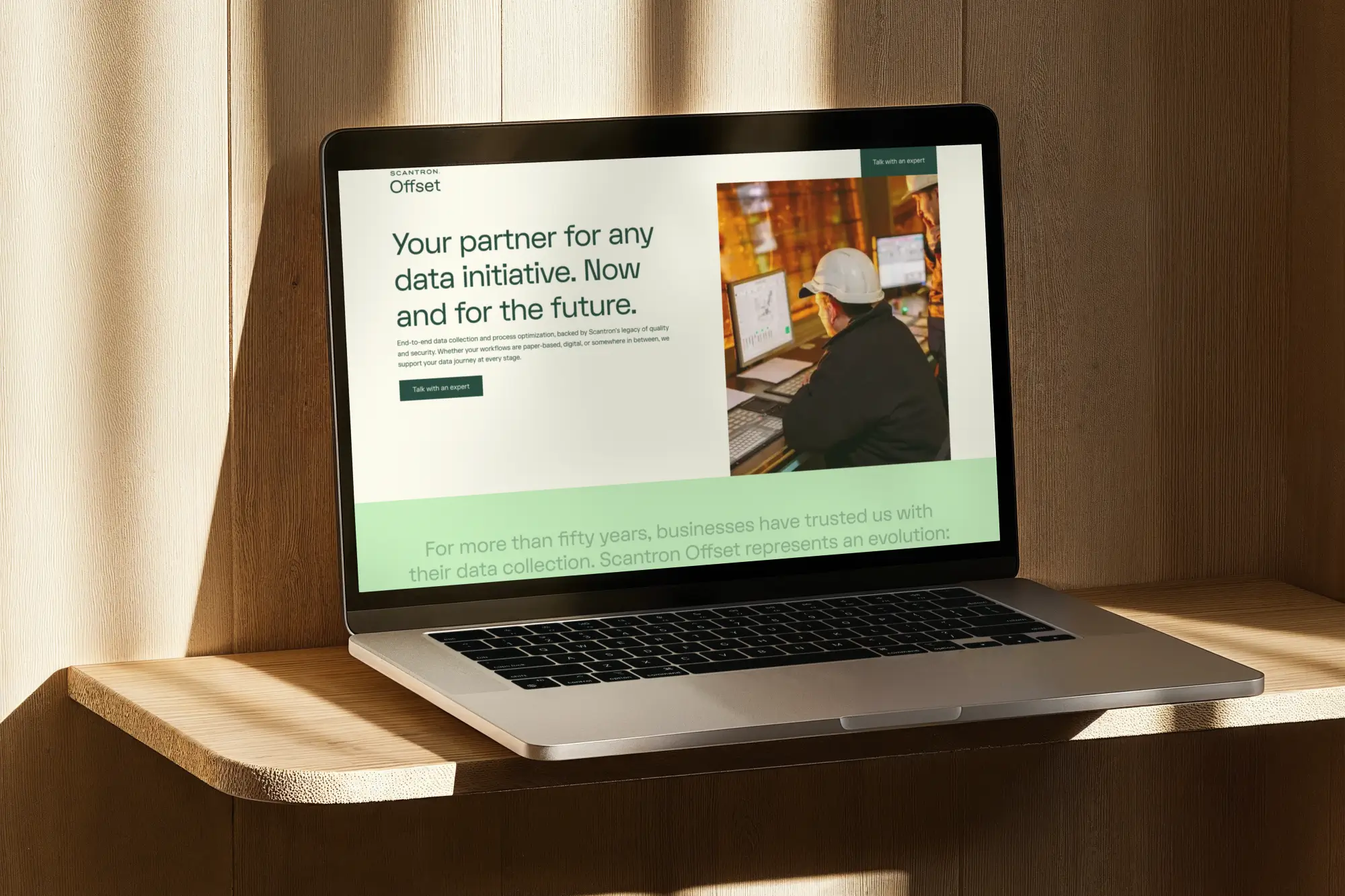
Scantron’s leadership team had one question: “Can we create a system that allows marketing to move faster while maintaining consistency across brand, sub-brands, and products?” This is a question shared by many of the top marketing leaders today. With more tools than ever, and AI multiplying what any team can produce, you'd expect this to be standard operating procedure. Yet, teams are still experiencing the challenges that have stood firmly against time-to-market for decades.
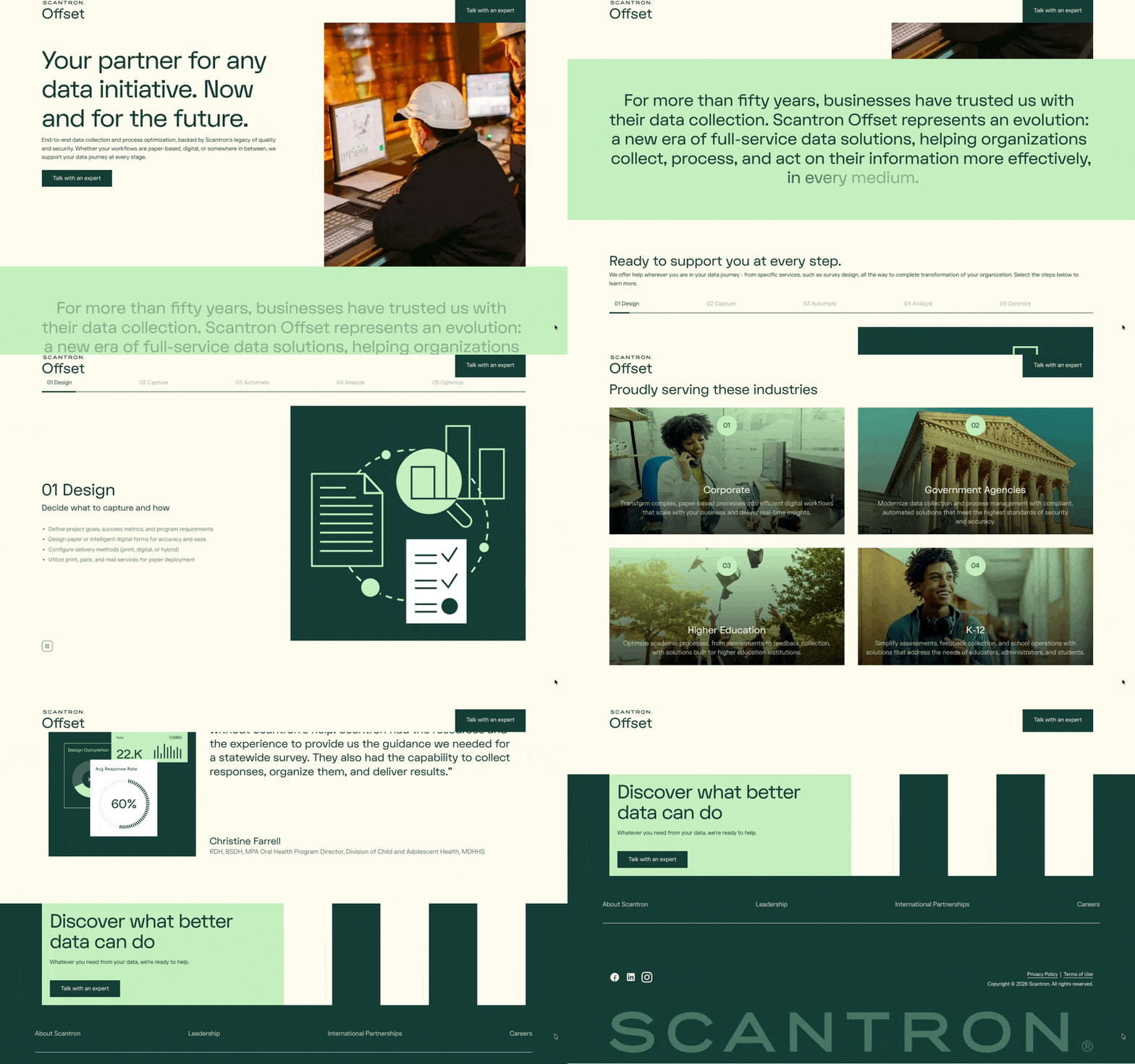
With the launch of their new product and sub-brand, Offset, leadership at Scantron saw an opportunity to answer this question, “Is Webflow the platform that allows us to fold AI into our workflow and achieve the speed and safety we know we need?” The project was perfectly scoped as a small bet with huge upside. How small was it exactly? A single page, launched on a subdomain, completely isolated from the main marketing site. Huck Finch redesigned the sub-brand and BrightSite built a system that the Scantron team could expand.
The success of the project would hinge on the marketer being able to update and ship pages totally independently of any development queue.
A new campaign was coming up and would need a new landing page. Standard practice told us that a new landing page took around 11 days from idea to production. For the Offset campaign, the page was already built. The marketer started from an on-brand template then customized images, messaging, and colors to denote the sub-brand. She didn’t have to worry about brand drift because the only options available to customize were the right options; colors from the brand palette, font styles that followed pre-defined rules, and a library of sections to choose from. Like a barista during the morning rush, she was protected by the recipes and ingredients at her disposal. Development hooked up the subdomain, the marketer took care of building and shipping pages to it. The repeatable process means that each time there’s a new campaign, there’s a new landing page to support it. Pick a template, add images and messaging, customize as needed, publish, all in the time it takes to finish a cup of coffee.
Since the pilot project, the entire Scantron marketing website has been migrated from WordPress to Webflow. We gave the marketer time back, so it’s only fair if we give the development team some time back as well, right? Webflow makes the mundane maintenance faster, and easier to run in the background. In the same way that the marketer can now measure her time-to-live in cups of coffee, development can measure maintenance tasks in the time it takes to write a prompt. Webflow’s investment in their MCP server means that schema, alt text, and all the other things that make up technical best practices can be handled with a prompt. Development takes care of the routine, and gets to focus on higher leverage product work.
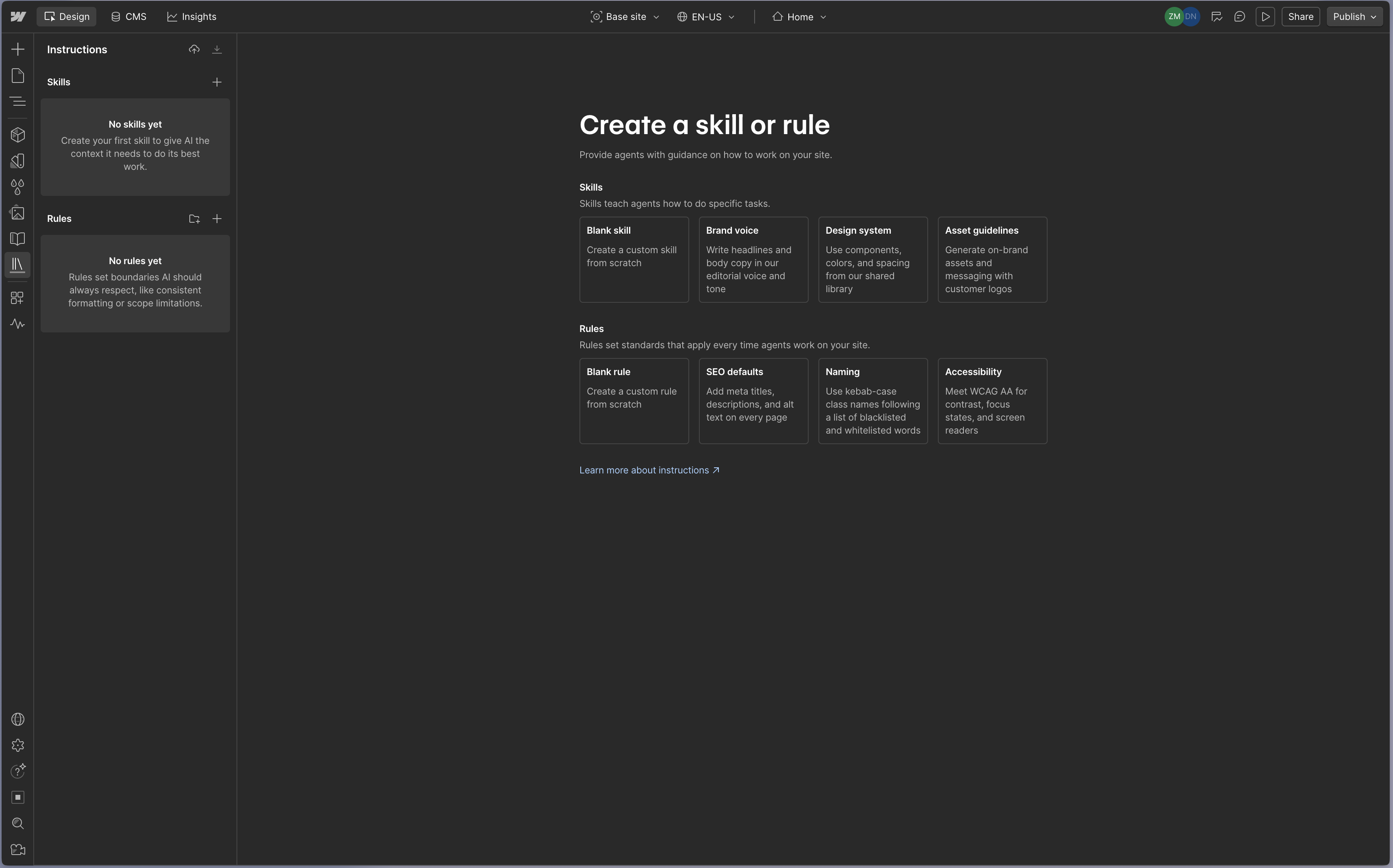
But, let’s not keep AI superpowers only for development. Webflow has AI tools for the marketer as well. The platform makes sure AI has clear context on brand voice, design tokens, existing styles, etc. That, combined with the AI friendly architecture we use at BrightSite, allows AI to whip up new pages with full context on the brand and existing design system. With a fresh template at her disposal, the marketer makes her updates and publishes the page with half a cup of coffee left! What to do now?
With the necessary routine work running more efficiently, there is time for faster testing and iteration, which are linchpins in the fabled growth engine. Our marketing friend at Scantron sits down each morning with a fresh cup of coffee and optionality. She has a system that lets her control the cadence of new landing pages, build a personalization strategy to support ABM, and A/B test to increase the number of meetings booked without increasing traffic. Webflow and the AI-friendly framework her site was built on put routine work on autopilot. Teams without the foundation can buy the same tools, but don’t get the leverage because AI has nothing concrete to stand on. The question for you is how many cups of coffee does it take to make an impact? 11? 22? 44?
